Reducing Chronic Absenteeism with Esports Driven Curriculums
Reducing Chronic Absenteeism with Esports Driven Curriculums
Dec 2, 2024
Updated Dec 18, 2025
Share article
Summary
Chronic absenteeism remains a widespread challenge driven by disengagement, bullying, and a lack of connection between school and future careers. Esports-driven curriculums address these issues by aligning instruction with student interests, strengthening social belonging, and connecting learning to real-world career pathways. Schools implementing esports report higher attendance, fewer disciplinary issues, and stronger student engagement. Impact studies show esports participants attend more school days than their peers, increasing both student outcomes and attendance-based funding. Gameplan supports this work with tools that track attendance, engagement and progress to help schools act early and effectively.
Chronic Absenteeism Is Still a National Problem
Chronic absenteeism – when students miss at least 10% of the school year – has been a problem in schools for a long time. Chronic absenteeism rates were expected to decline after the pandemic, but rates surged from 15% in 2018 to 28% in 2022. While chronic absenteeism rates were improved in 2023, it still remained 75% higher than its pre-pandemic state. But why is it still a problem and what can we do about it? Let’s take a look.
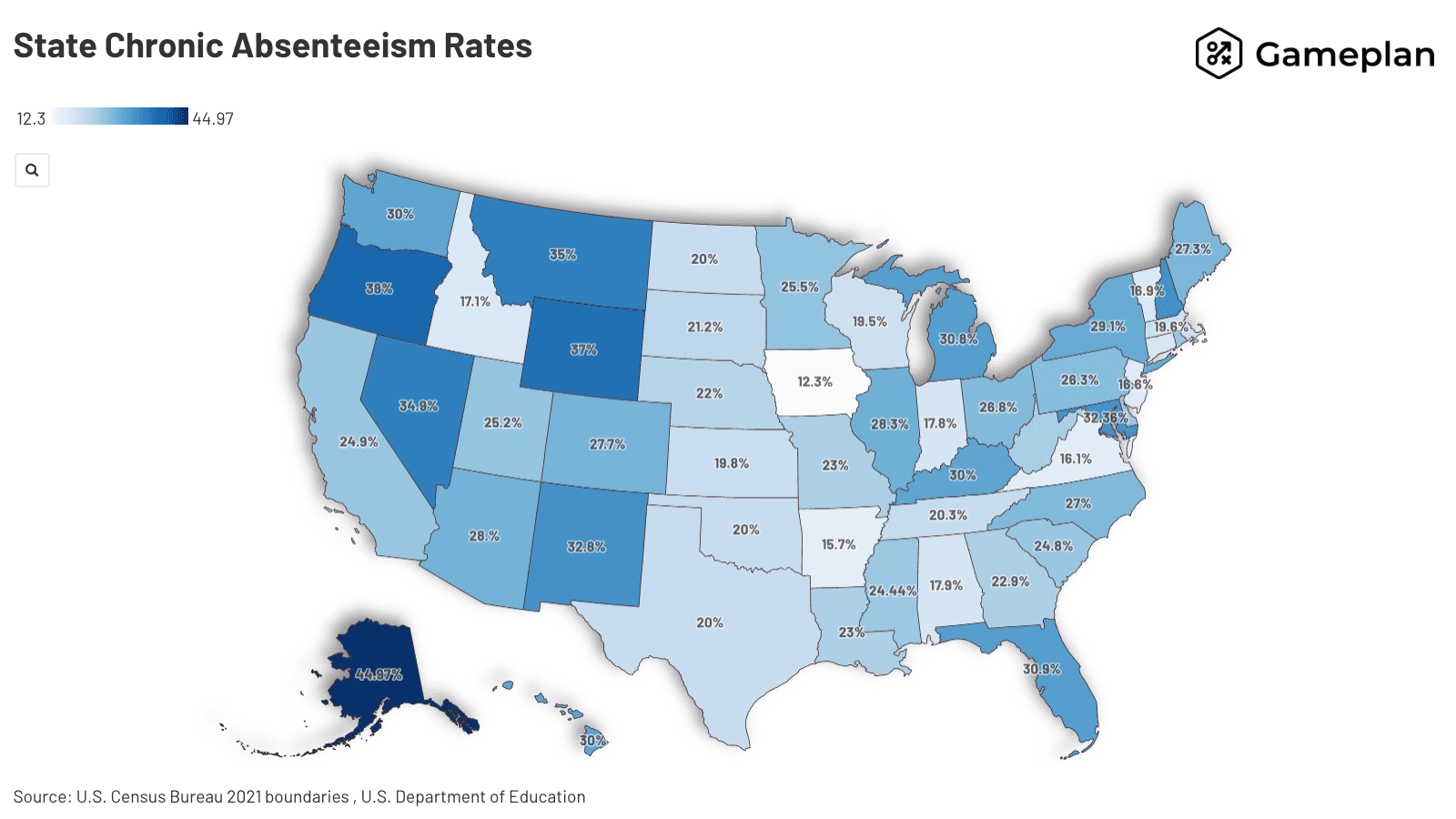
Nationwide, public school leaders estimated that 32% of students ended the 2023-2024 school year behind a grade level in at least one academic subject, which was 33% at the end of the 2021-2022 school year. As you can see in the below map, chronic absenteeism rates are still a problem, with 38 of the states having more than 20% chronic absenteeism rates.
Why Students Stop Showing Up
According to a survey, 64% of American teens stated that they find school boring. 41% said they enjoy going to school while 30% said that school is a waste of time. Students also listed lack of interest in school, fear of bullying, school not providing value and not seeing a connection between classes and their career interests. The CDC reports that bullying and absenteeism are associated, with students who experience in-person and electronic bullying being 6 times more likely to miss school because of safety concerns than those who have not been bullied.
The high levels of chronic absence show the urgency of systematic responses to build a culture of daily attendance. This can be done by investing in solutions that create positive conditions for learning in schools so that students are motivated to show up. This also includes policy solutions to address unreliable transportation, food insecurity and health care.
The good news is that chronic absenteeism is a problem that can be addressed. The most effective way to tackle it is by using the data we have to identify areas of problem and try to prevent them.
Why Esports Works Where Traditional Approaches Fall Short
Students who are absent in early grades are more likely to be absent in later grades. So how do you break the cycle? By using the power of one of the most popular student passions; esports. How? Video games, when incorporated into the curriculum, become a method of engaged instruction and learning that not only students love but has a multitude of benefits.
Research supports this approach. In a California district impact study, students participating in esports showed a 33.5% lower absence rate than non-participants. On average, esports students attended 7.34 more school days per year, generating $354,000 in additional ADA-based funding.
Another study found that introducing game-based learning for just 20 minutes per day led to a 21% increase in attendance and a 27% reduction in suspensions within one month.
When students look forward to school, they show up. But how exactly does it reduce chronic absenteeism?
Esports Builds Belonging and Social Connection
We know that higher attendance results in desirable outcomes, with students in elementary and middle school with higher attendance having higher GPAs. Giving students something to look forward to, speaking to their passion and interests motivates them further to participate in school. It speaks to the 64% of students who find school boring and expressed a lack of interest and and not seeing connection between classes and careers, but also for those who fear bullying -who are 6 times more likely to miss school- as esports isn't just about individual skill. Unlike traditional competitive environments, esports emphasizes teamwork, communication, and shared goals. Students who may feel excluded elsewhere find a space where their skills matter.
This sense of belonging plays a critical role in attendance. Schools like Madison Junior High saw improvements in both attendance and behavior after introducing esports. Students reported feeling more connected to peers and more motivated to attend school consistently. Esports gives students a reason to come to school, a team to belong to, and a pathway to explore future opportunities.
How Esports-Driven Curriculums Are Implemented
Schools typically integrate esports in two complementary ways: as part of the instructional day and as structured extracurricular programming.
Within the school day, esports-driven curriculums function as a medium of instruction. Courses align with CTE pathways and focus on areas such as game design, media production, cybersecurity, and career exploration. Instruction is project-based, standards-aligned, and designed to build both technical and transferable skills. Students work collaboratively, apply problem-solving strategies, and connect learning to real-world applications.
Outside the classroom, esports clubs and after-school programs provide additional structure and competition without disrupting academic schedules. These programs reinforce teamwork, leadership, and time management while extending engagement beyond the school day.
Many schools start small with a single club or elective and scale into full CTE-aligned programs as interest and capacity grow. Professional development and digital learning platforms help educators manage this growth effectively.
Esports Overlaps with Career and Technical Education (CTE) Pathways
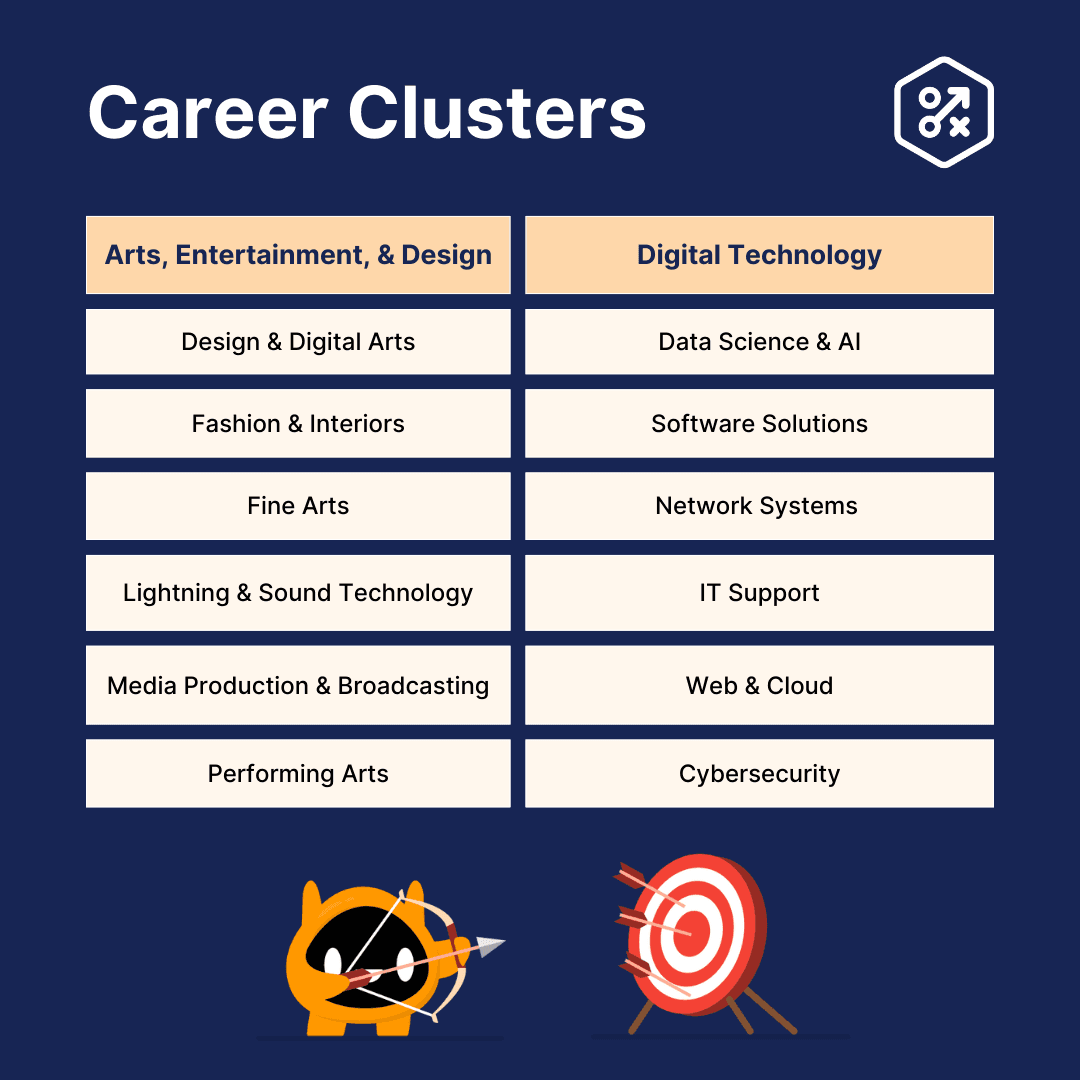
That’s right! Esports intersects with multiple Career and Technical Education pathways, particularly within Arts, Entertainment, and Design and Digital Technology clusters. Students explore careers in game design, digital media, broadcasting, IT, cybersecurity, and interactive technology.
These pathways extend further into advanced manufacturing, construction, hospitality, and event management. From designing gaming peripherals and broadcast studios to planning esports tournaments and live events, esports exposes students to cross-industry career opportunities that blend creativity with technical skill.
By framing esports within CTE pathways, schools provide clarity, purpose, and workforce relevance, which are key factors in sustaining student engagement and attendance.
Using Data to Address Absenteeism Early
To tackle chronic absenteeism, schools need to track and understand key data. Digital learning platforms make this process actionable and seamless.
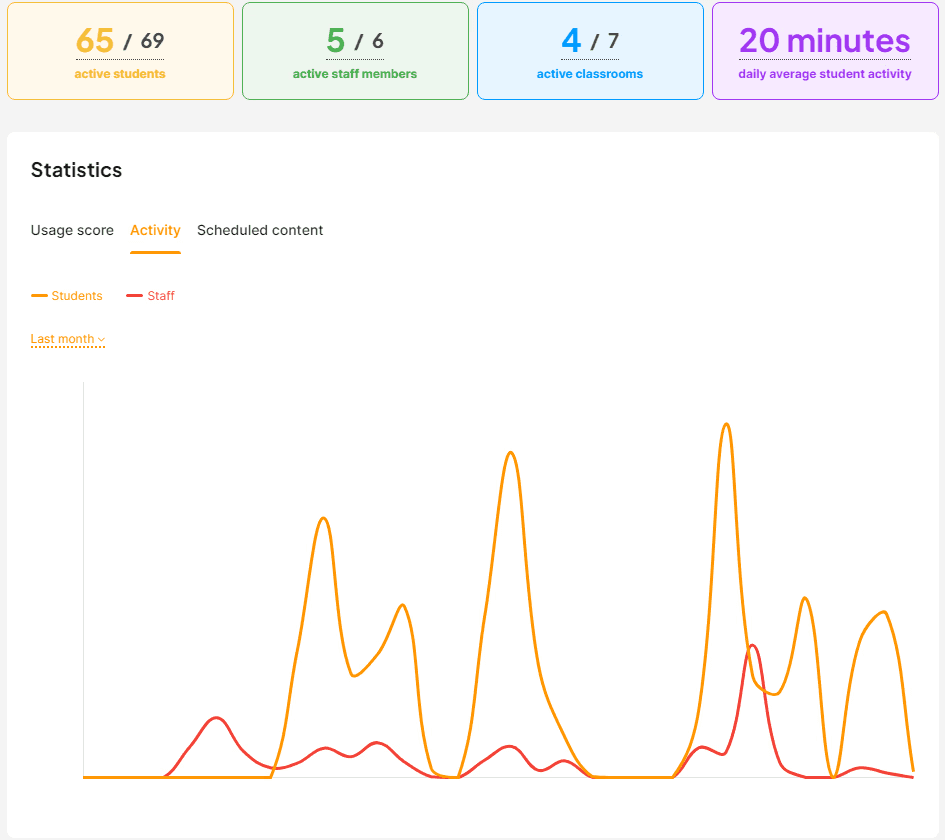
Gameplan enables schools to track attendance, monitor participation, and measure engagement in real time. AI-powered reporting surfaces trends early, allowing educators to intervene before absences become patterns. These insights help schools move from reactive responses to proactive support.
By combining engaging curriculum with actionable data, schools gain the tools they need to address absenteeism systematically and sustainably.
Turning Engagement into Attendance Gains
Chronic absenteeism is not solved by a single policy or incentive. It improves when students feel connected, supported, and motivated by learning that matters to them.
If you want to explore how esports can support your attendance strategy, schedule a short meeting with us. We'll be with you every step of the way.
Chronic Absenteeism Is Still a National Problem
Chronic absenteeism – when students miss at least 10% of the school year – has been a problem in schools for a long time. Chronic absenteeism rates were expected to decline after the pandemic, but rates surged from 15% in 2018 to 28% in 2022. While chronic absenteeism rates were improved in 2023, it still remained 75% higher than its pre-pandemic state. But why is it still a problem and what can we do about it? Let’s take a look.
Nationwide, public school leaders estimated that 32% of students ended the 2023-2024 school year behind a grade level in at least one academic subject, which was 33% at the end of the 2021-2022 school year. As you can see in the below map, chronic absenteeism rates are still a problem, with 38 of the states having more than 20% chronic absenteeism rates.
Why Students Stop Showing Up
According to a survey, 64% of American teens stated that they find school boring. 41% said they enjoy going to school while 30% said that school is a waste of time. Students also listed lack of interest in school, fear of bullying, school not providing value and not seeing a connection between classes and their career interests. The CDC reports that bullying and absenteeism are associated, with students who experience in-person and electronic bullying being 6 times more likely to miss school because of safety concerns than those who have not been bullied.
The high levels of chronic absence show the urgency of systematic responses to build a culture of daily attendance. This can be done by investing in solutions that create positive conditions for learning in schools so that students are motivated to show up. This also includes policy solutions to address unreliable transportation, food insecurity and health care.
The good news is that chronic absenteeism is a problem that can be addressed. The most effective way to tackle it is by using the data we have to identify areas of problem and try to prevent them.
Why Esports Works Where Traditional Approaches Fall Short
Students who are absent in early grades are more likely to be absent in later grades. So how do you break the cycle? By using the power of one of the most popular student passions; esports. How? Video games, when incorporated into the curriculum, become a method of engaged instruction and learning that not only students love but has a multitude of benefits.
Research supports this approach. In a California district impact study, students participating in esports showed a 33.5% lower absence rate than non-participants. On average, esports students attended 7.34 more school days per year, generating $354,000 in additional ADA-based funding.
Another study found that introducing game-based learning for just 20 minutes per day led to a 21% increase in attendance and a 27% reduction in suspensions within one month.
When students look forward to school, they show up. But how exactly does it reduce chronic absenteeism?
Esports Builds Belonging and Social Connection
We know that higher attendance results in desirable outcomes, with students in elementary and middle school with higher attendance having higher GPAs. Giving students something to look forward to, speaking to their passion and interests motivates them further to participate in school. It speaks to the 64% of students who find school boring and expressed a lack of interest and and not seeing connection between classes and careers, but also for those who fear bullying -who are 6 times more likely to miss school- as esports isn't just about individual skill. Unlike traditional competitive environments, esports emphasizes teamwork, communication, and shared goals. Students who may feel excluded elsewhere find a space where their skills matter.
This sense of belonging plays a critical role in attendance. Schools like Madison Junior High saw improvements in both attendance and behavior after introducing esports. Students reported feeling more connected to peers and more motivated to attend school consistently. Esports gives students a reason to come to school, a team to belong to, and a pathway to explore future opportunities.
How Esports-Driven Curriculums Are Implemented
Schools typically integrate esports in two complementary ways: as part of the instructional day and as structured extracurricular programming.
Within the school day, esports-driven curriculums function as a medium of instruction. Courses align with CTE pathways and focus on areas such as game design, media production, cybersecurity, and career exploration. Instruction is project-based, standards-aligned, and designed to build both technical and transferable skills. Students work collaboratively, apply problem-solving strategies, and connect learning to real-world applications.
Outside the classroom, esports clubs and after-school programs provide additional structure and competition without disrupting academic schedules. These programs reinforce teamwork, leadership, and time management while extending engagement beyond the school day.
Many schools start small with a single club or elective and scale into full CTE-aligned programs as interest and capacity grow. Professional development and digital learning platforms help educators manage this growth effectively.
Esports Overlaps with Career and Technical Education (CTE) Pathways
That’s right! Esports intersects with multiple Career and Technical Education pathways, particularly within Arts, Entertainment, and Design and Digital Technology clusters. Students explore careers in game design, digital media, broadcasting, IT, cybersecurity, and interactive technology.
These pathways extend further into advanced manufacturing, construction, hospitality, and event management. From designing gaming peripherals and broadcast studios to planning esports tournaments and live events, esports exposes students to cross-industry career opportunities that blend creativity with technical skill.
By framing esports within CTE pathways, schools provide clarity, purpose, and workforce relevance, which are key factors in sustaining student engagement and attendance.
Using Data to Address Absenteeism Early
To tackle chronic absenteeism, schools need to track and understand key data. Digital learning platforms make this process actionable and seamless.
Gameplan enables schools to track attendance, monitor participation, and measure engagement in real time. AI-powered reporting surfaces trends early, allowing educators to intervene before absences become patterns. These insights help schools move from reactive responses to proactive support.
By combining engaging curriculum with actionable data, schools gain the tools they need to address absenteeism systematically and sustainably.
Turning Engagement into Attendance Gains
Chronic absenteeism is not solved by a single policy or incentive. It improves when students feel connected, supported, and motivated by learning that matters to them.
If you want to explore how esports can support your attendance strategy, schedule a short meeting with us. We'll be with you every step of the way.

Written by

Chris Aviles
Chris Aviles is the Product Evangelist at Gameplan and the founder of Garden State Esports. A passionate educator and pioneer in scholastic esports, Chris has revolutionized the educational landscape by integrating esports into schools. His book, The Esports Education Playbook: Empowering Every Learner Through Inclusive Gaming, reflects his commitment to using gaming to enhance student engagement and learning. Under his leadership, GSE has become the largest scholastic esports league in the U.S., fostering teamwork, leadership, and inclusivity among students. At Gameplan, Chris continues to advance his mission of expanding esports opportunities in education.
Share article
More articles to read

From Skepticism to Scholarships: Madison’s Esports Journey
How Three High Schools Recovered $20K in ADA Funding with Scholastic Esports

Announcing: Unreal Engine 3D Fundamentals Certification

From Physics to Game Design: Game-Based Learning at Elite

Building Social-Emotional and Career Skills Through Gameplan at Menta

California Military Institute Builds Future-Ready Careers with Gameplan
